
Structure and type of optical cable
author: Zhejiang Linquick Technology Co., Ltd.
2023-10-27
The basic requirements of the optical cable are to protect the inherent mechanical and optical properties of the fiber, prevent the fiber from breaking during construction and during use, and maintain the stability of the transmission characteristics. To this end, it is necessary to design various structures of optical cables according to the use of the environment, so as to avoid the erosion of optical fibers by stress and harmful substances.
(1) Cable core
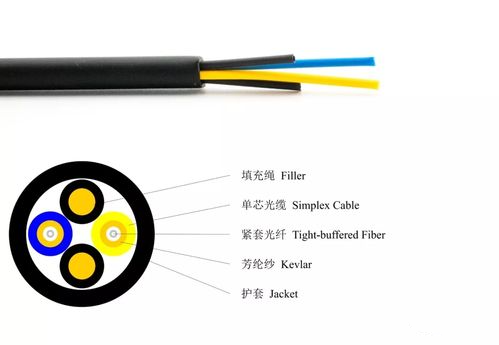
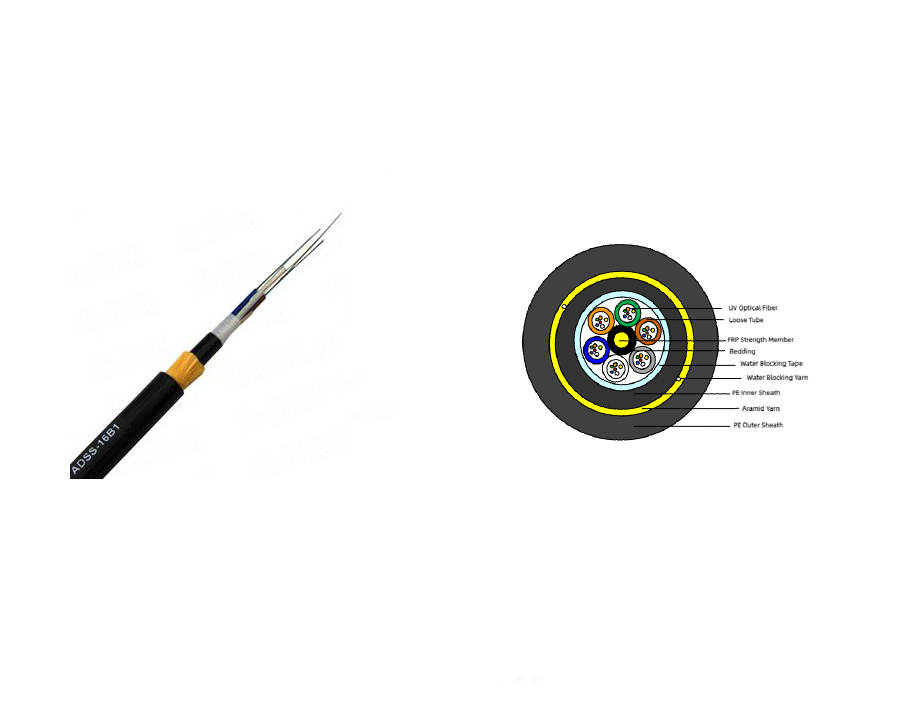
Optical cable consists of two parts: cable core and sheath. The cable core generally includes a coated fiber (core wire) and a reinforcement, and sometimes the reinforcement is distributed in the sheath when the cable core is mainly the core wire. The core wire is the core of the optical cable and determines the transmission characteristics of the optical cable. Reinforcement to withstand the tension of the cable, usually the use of Young's modulus of large steel wire or non-metallic aramid fiber. The sheath is generally composed of polyethylene (or polyvinyl chloride) and steel or aluminum strip, which plays a mechanical protection and environmental protection role on the cable core, requiring good pressure resistance and sealing performance.
In order to improve the mechanical strength of the optical fiber and suppress the micro-bending loss, the optical fiber is usually coated twice. The primary coating material is generally soft plastic, such as UV-cured acrylic resin or heat-cured silicone resin, and the diameter of the primary coating fiber is 0.25~0.40mm. There are two kinds of double-coated optical fiber: tight sheath and loose sheath. Tight sheath optical fiber is tightly coated with nylon 12 with a large modulus on the surface of the once-coated optical fiber, and loose sheath optical fiber is the once-coated optical fiber placed in a high-strength sleeve tube, and the sleeve is filled with oil glue. The diameter of the casing is determined by the number of optical fibers contained. The primary coated fiber has a certain residual length in the casing, which can move moderately freely, avoid stress and micro-bending loss, and improve low-temperature characteristics.
In order to increase the number of optical fibers contained in the cable, a ribbon-type core wire is used. The single coated fiber (4~12 fibers) is arranged in parallel and coated to form a strip line, and then the strip line is superimposed layer by layer to form a strip unit core. This core wire can be placed in a large tube or in a skeleton slot to form a high-density optical cable.
(2) Sheath
The role of the sheath is to protect the cable core, prevent mechanical damage and erosion of harmful substances, and pay special attention to the resistance to side pressure, as well as sealing moisture resistance, and corrosion resistance. In the central casing and ribbon cable core structures, the stiffeners are distributed in the sheath, and the sheath also acts as an anti-tension.
The cable structure requirements for special occasions are more stringent. Submarine cable to withstand seawater pressure and trawler interference, to prevent seawater erosion, the mechanical strength and sealing performance of the cable requirements are very high. Generally, one or more layers of galvanized round steel wire are armored to protect the cable core and sheath. Power communication cable to prevent strong electric fields, especially short circuits,s and lightning caused by the strong electric field on the cable. non-metal cable, cable is generally made of high-strength non-metallic materials, commonly used fiber-reinforced plastic as reinforcement, such as self-supporting cable and winding cable. The composite cable is the non-metal cable wrapped in the hollow ground cable, with one or more layers of aluminum alloy wire and aluminum-clad steel wire armor. In mining areas or subways and on other occasions to use flame retardant cable, polyvinyl acetate as a sheath can withstand high temperatures above 250℃.
(3) Armouring
Submarine cable to withstand seawater pressure, erosion, and trawler intrusion, for this reason, the mechanical strength and sealing performance of the cable requirements are very high. Generally, one or more layers of galvanized round steel wire are armored to protect the cable core and sheath. The typical armored material is steel tape or steel wire, and the method of manufacturing different types of optical cables is to change the armored material and thickness or use multiple layers of armor.
Submarine cable to withstand seawater pressure, erosion, and trawler intrusion, for this reason, the mechanical strength and sealing performance of the cable requirements are very high. Generally, one or more layers of galvanized round steel wire are armored to protect the cable core and sheath. The typical armored material is steel tape or steel wire, and the method of manufacturing different types of optical cables is to change the armored material and thickness or use multiple layers of armor.
 Analysis of advantages of Copper cables and Optic fiber
  Discussion on measurement method of characteristic impedance of RF coaxial cable
  What is a fiber optical feeder cable
  Zhejiang Linquick Technology will participate in the 134th Canton Fair
  Introduction to RF coaxial cable
  Five common cable classification
  What is FTTA Remote Cable
  Test for insulation and sheath thickness of wire and cable products
  Congratulations to Zhejiang Linquick 24th CIOE a complete success
  Structure and type of optical cable
  Outdoor optical cables: the link that connects the world
  Analysis and improvement of drop cable fiber attenuation problem
  Wire and cable quality test three important indicators
  Laying method of communication optical cable
  Teach you to identify and choose coaxial cable and twisted pair
  Overview of material and structure of waterproof cable
  Process requirements and instructions for armored cables
  A brief discussion on the application of cluster wire
  Safety requirements and storage methods for wire and cable use
 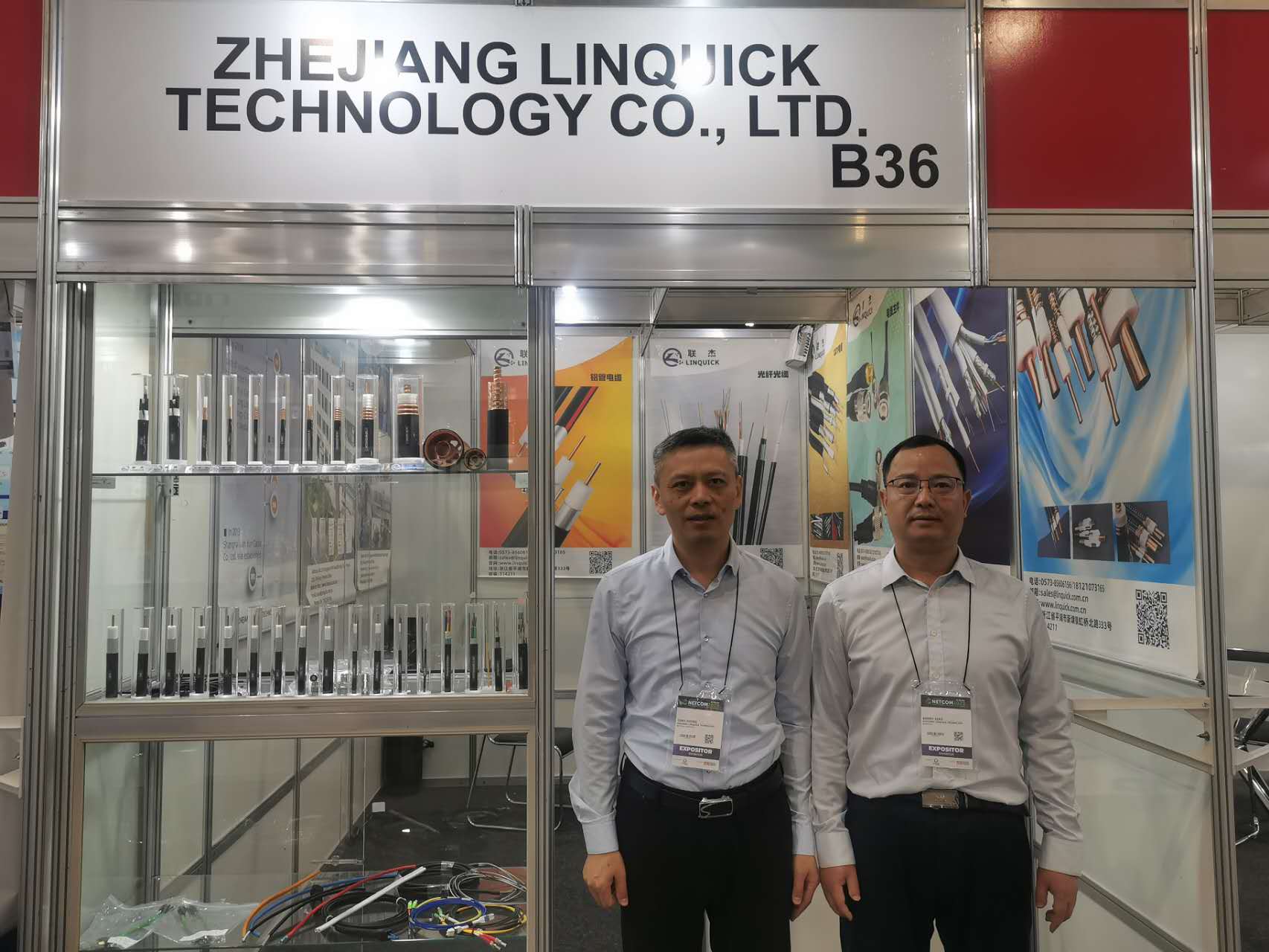 Zhejiang Linquick NETCOM2023 exhibition was successfully held