
Safety requirements and storage methods for wire and cable use
author: Zhejiang Linquick Technology Co., Ltd.
2023-08-08
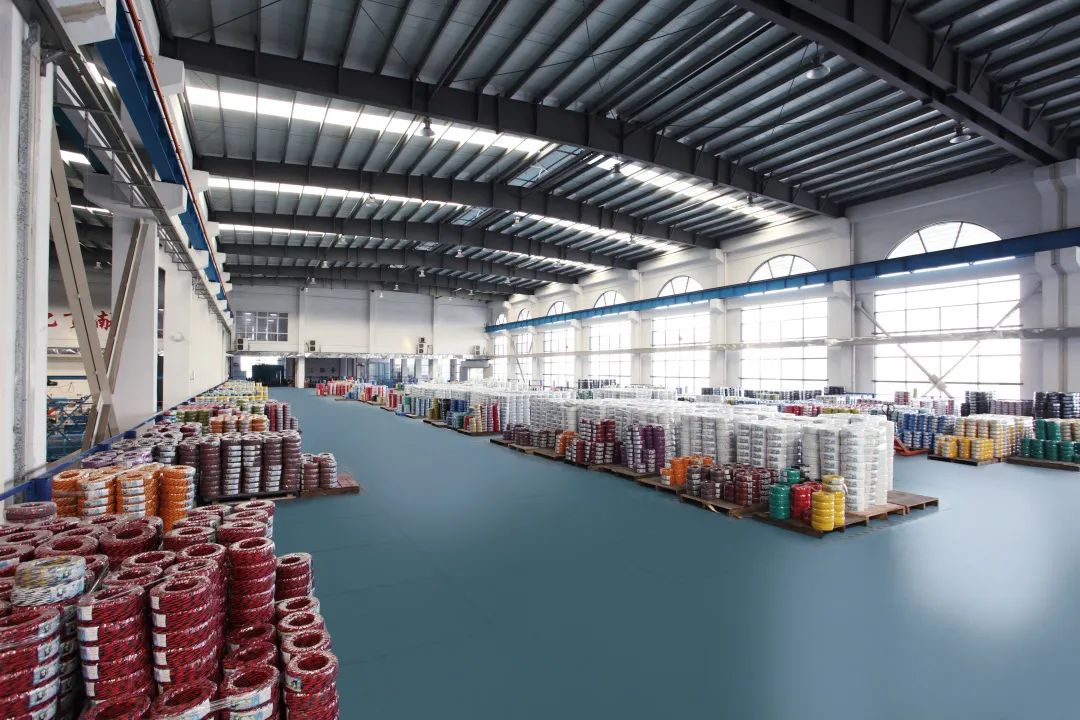
Wire and cable are generally composed of several or several groups of wires twisted into a similar cable, each group of wires insulated from each other, and often twisted around a center, the entire outer bread has a highly insulated covering layer.
More are erected in the air or installed underground, underwater, for telecommunications or electricity transmission. Cables can be divided into power cables, communication cables, and control cables according to their uses. If improperly stored, it will affect the service life and safety of the cable, and even cause unnecessary disasters, so how to store it is a problem that needs attention.
First, safety requirements
1. When the cable lines cross each other, the high-voltage cable should be under the low-voltage cable. If one of the cables is protected by a tube or separated by a partition within 1m before and after the crossing point, the allowable minimum distance is 0.25m.
2. When the cable is close to or crossed with the heat pipeline if there are heat insulation measures, the parallel and cross ultra-small distance is 0.5m and 0.25m respectively.
3. When the cable crosses with the railway or road, it should be protected through the pipe, and the protection pipe should extend out of the track or road surface 2m away.
4. The distance between the cable and the foundation of the building should ensure that the cable is buried outside the water distribution of the building; When the cable is introduced into the building, it should be protected through the pipe, and the protection pipe should also be beyond the building water.
5. The distance between the cable directly buried in the ground and the ground of the general grounding device should be 0.25~0.5m; The buried depth of the cable directly buried in the ground should not be less than 0.7m, and should be buried under the frozen soil layer.
Second. Storage method
If the cable is to be stored for a long time, the following considerations should be made according to the location of the cable:
1. Laying directly in the underground cable trench, this environment is an ultra-small control range. The installation of the cable trench should be regularly checked for dryness or humidity.
2. Under the roof. As long as the cable is not directly exposed to sunlight or ultra-high temperatures, standard LAN cables can be applied, and pipes are recommended.
3. Suspension application/overhead cable. Consider the sag and pressure of the cable, which binding method is used, and whether the cable is directly exposed to sunlight.
4. Exterior wall. Avoid direct sunlight on the wall and man-made damage.
5. Underground pipes. In order to facilitate future upgrades, cable replacement, and isolation from surface pressure and the surrounding environment, laying pipes is a better method. But don't expect the pipe to stay dry forever, which will affect the choice of cable type.
6. In pipes (plastic or metal). Such as in pipes, pay attention to the damage of plastic pipes and the thermal conductivity of metal pipes.
 Analysis of advantages of Copper cables and Optic fiber
 Structure and type of optical cable
 Discussion on measurement method of characteristic impedance of RF coaxial cable
 What is a fiber optical feeder cable
 Zhejiang Linquick Technology will participate in the 134th Canton Fair
 Introduction to RF coaxial cable
 Five common cable classification
 What is FTTA Remote Cable
 Test for insulation and sheath thickness of wire and cable products
 Congratulations to Zhejiang Linquick 24th CIOE a complete success
 Structure and type of optical cable
 Outdoor optical cables: the link that connects the world
 Analysis and improvement of drop cable fiber attenuation problem
 Wire and cable quality test three important indicators
 Laying method of communication optical cable
 Teach you to identify and choose coaxial cable and twisted pair
 Overview of material and structure of waterproof cable
 Process requirements and instructions for armored cables
 A brief discussion on the application of cluster wire
 Zhejiang Linquick NETCOM2023 exhibition was successfully held